Warm Fuzzies

There are always times when we are in need of a little pick-me-up. Others may not even know you are in need of this support. In fact, most of the time, our inner-most thoughts and feelings, heart-ache or sadness are simply lost in ourselves because often people are so busy in their day-to-day lives that they are not able to take time out of their day to take notice.

The story below will make you take notice.  This was posted by Alec Couros (@courosa) on Twitter on Friday. It is a very sweet story that will, hopefully, inspire you to do a Random Act of Kindness this long weekend and in the days, weeks, and months to come.

What a sweet, heart-breaking story. I was touched deeply by this story and the heart-felt kindness of a fellow-Vancouverite. Continue reading “Warm Fuzzies”

Using Video Recording to Enhance Learning

In addition to my vice-principal assignment, I also have a 70% teaching assignment.  That teaching assignment this year is working with students who struggle in their academic areas – mainly reading, writing and math as a Learning Support Teacher. While I have been a Learning Support Teacher in the past, this year I started experimenting a bit, trying some new things – things I would not have been able to do very easily in the past – without the use of technology.

One thing I have started doing this year is recording students reading.  I started using voice threads to record their oral reading, which I thought would be a great way for students to assess their own reading and areas they thought they could improve. Often, when students hear the audio recording of themselves reading, and are asked “What did you do well? (and why?)”  and “What do you think you need to work on? (and why?)”, they come up with exactly what I would have told them. For example, I have heard comments like: “I need to read quicker – like when I talk.”  “I stopped too many times which made my reading sound choppy.”

Here’s an example of Adam reading:

And here is Abigail reading:

I decided to take it a step further and start videotaping the students reading.  At first I did this to add to our School Success Blog as a way to demonstrate that our Grade 1 students were learning to finger track the words they were reading. I didn’t show any faces in this video because at the time, we hadn’t yet got all the website permissions back from our students.Continue reading “Using Video Recording to Enhance Learning”

Quiet Reflection

Ever have a time when you were in need of quiet reflection? Away from work. Away from home. Away from your kids and spouse? Away from life.

That was me today.

Don’t get me wrong, I love my life.  Things have been rather chaotic with a lot happening in my life and in the lives of friends and family. In a word, it’s been overwhelming. So instead of facing what has been happening, I have been focusing on work and my family – all things I enjoy and love. What I have not been doing, however, is focusing on me and what I may be needing.

So, today I found some time to just get away from the noise of home, away from the work waiting for me, and away from the needs of my kids and husband. Today, I took some time for myself. What a concept, I know.

I was on the way out the door to the grocery store, but instead of heading out the door immediately, I grabbed my camera and then headed out.Continue reading “Quiet Reflection”

What Type of Leader Are You?

Recently, I attended the Connecting Leaders Conference: Learning for Changing Times in Richmond, BC. This is a yearly conference put on by our British Columbia Principals’ and Vice-Principals’ Association (BCPVPA).  I signed up for this conference in August and was patiently waiting for the day to come!  The day was full of great connections, questions, and thoughtful reflections (thanks Chris, Darcy, Trevor, Scott, and the #SD36 crew). What more can one ask for when being involved in professional development?

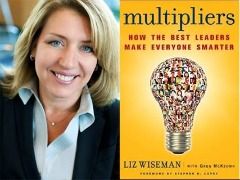
In our Friday keynote, Liz Wiseman talked about her book, Multipliers: How the Best Leaders Make Everyone Smarter. What a great title for a book! To say I was intrigued, is an understatement.  Who doesn’t want to be a great leader?  I was interested in hearing what Liz had to say.

Liz Wiseman divided leaders into to categories: Diminishers and Multipliers. She states that Diminishers are leaders who “are absorbed in their own intelligence, stifle others, and deplete the organization of crucial intelligence and capability.”  These people always need to be the smartest people in the room. They operate under the assumption, “People won’t figure it out without me.” According to Wiseman, there are five disciplines of the Diminisher: 1. The Empire Builder, 2. The Tyrant, 3. The Know-It-All, 4. The Decision Maker, and 5. The Micromanager.  Diminishers are those who make negative comments, are critical but not constructive, can be condescending, and focus only on mistakes.  These are the leaders who continually make you feel inadequate. According to a study by Wiseman, et. al., as a result of these characteristics, the Diminisher actually gets less than 50% of their employees effort and results.Continue reading “What Type of Leader Are You?”

It Always Comes Back to Relationships

The teaching assignment in my vice-principal role has changed slightly from last year. This year I am part of the Learner Support Teacher Team.  I work with students in Grade 1, 2, and 4.

06 05 11 my reader

My first inkling was to get all the sight words, guided reading books, and other materials ready to bombard these learners struggling with the basics. I’ve been a Learner Support Teacher in the past and that’s what I’ve done – started right from day one of LST support – giving them all sorts of meaningful learning opportunities. Or what I thought was meaningful learning opportunities.

Over the past year though of working in an inner city school, I’ve come to realize that things are different here. Our students first need certain conditions met before I can realistically expect them to maintain focus and try to move forward in their learning.Continue reading “It Always Comes Back to Relationships”

If I Can, So Can You

Apple Family
Flickr Photo by Melissa C. Toledo

OK, here it goes . . .   I’ve got a bit of a confession to make.

I’ve been connected (online, with twitter, blogging, reading blogs, etc…) for almost a year and a half, but I still feel like a novice. A complete novice at times.  Let me tell you a story….

At the school I work as a vice-principal I’ve been known as the one who knows how all this “technology” works. Yes, I’ve worked hard to figure some things out. I’ve asked for help from many people and have had, and continue to have many struggles along the way.  I have stayed up until the wee hours of the night, constantly checking my notes, struggling to figure things out. It does not come easy to me.  I guess I do it with a smile, and a “can do” attitude because I seemed to have fooled everyone.  Everyone seems to think I know what I am doing.

Last year, our school submitted a proposal for the district Innovative Learning Designs grant.  We were successful and, as a result, purchased laptops, iPads, document cameras, and projectors for all participating classrooms.  We also ordered a number of Apple TV’s. As the order was coming in at the end of the year I just couldn’t help but take a deep breath whenever I walked by the new equipment. Projector adaptors, iPad adaptors, computer cables, VGA adaptors, USBs, HDMI cables, among others, I’m sure. I look at them and shook my head. Oh my. What was all this equipment for? How was I going to set this all up? Or, better yet, WHO was going to set all this stuff up?Continue reading “If I Can, So Can You”

Shareski Shares

My list of blogging ideas is getting so long!  It’s been so busy with work, that I have found little time to blog about all the things I want to. Instead, I’ve been trying to keep a list.

The first thing I’d like to catch up on is our district Engaging the Digital Learner Dinner Series. I talked about it a bit here, but didn’t talk about our speakers.

The night started out with some inspiring presentations from teachers from our own district. They described some of the amazing things they are doing in their own schools. We have such talent in our district and so many inspiring, out-of-the box things happening here, it was nice to be able to hear about them first hand.

After dinner, we had, Dean Shareski (@shareski on Twitter) speak with us. He was engaging, funny, thought-provoking, and also gave us a number of ideas we could try the next day!  Before I talk about the great ideas he shared, I wanted to touch on something that really struck me.

Dean discussed how the Learning Outcomes for Language Arts in British Columbia are divided into six areas, which could, in turn, be separated into 2 areas: those that focused on consumption and those that focused on creation. As you look at this list, think about what we focus on as educators. What do we spend the most/least amount of time on?Continue reading “Shareski Shares”

Nurturing Learning Without Limits

A colleague recently shared with me a video about training fleas. She used it with her staff at the beginning of a professional development activity she was leading on differentiated instruction. What a great connection to differentiated instruction!


A bit about the video…


A scientist (aka flea trainer) places a large number of lively fleas in a small mason jar. You can see the fleas jumping around in the jar, surpassing the top of the jar on each jump. Then, the flea-trainer leading the experiment puts a lid on the jar. The lid remained on the jar for 3 days at which point the flea-trainer removed the lid. Once the lid was removed, the fleas would not jump any higher than the top of the mason jar. Ever. This impacted their offspring as well, who, when born would not jump any higher than their parents – they would not jump higher than the mason jar either.


Here’s the video, if you are interested in watching:


So, as I listened to my colleague and as I watched the video afterwards, I thought about how I would use this video to make meaning in many parts of my life, as a mom, as a teacher, and as a leader in education. Through this reflection, I ended up asking myself a number of questions.


As a teacher, I think about how I help all my students reach their potential. How do I make sure they are learning to the best of their ability? How do I ensure they do not put limits on themselves? How do I make learning open-ended enough so all students can succeed and stretch their learning. How do I reach them where they are at and then nurture their learning so that they take risks necessary to learn at a rate they (or others) didn’t believe was possible?


As a leader in education, I think about every single student in our school. A main part of my job as an administrator is to help ensure the learning of all of the students. I believe in every single student in our school. I believe that every single student wants to learn and is able to learn. How do I, as an administrator, ensure that each student is learning to, and surprassing, their potential? What am I doing to encourage the risk-taking of the staff member I work with? How am I encouraging them to step outside their comfort zone to reach for the stars in their own learning and teaching? To have impact on the learning of students, we must first have impact on the learning of our teachers (and other staff members).


As a mom, I ask myself, “What am I doing to ensure my own children continue to reach and surpass their potential?” What am I doing as a parent to ensure that they do not limit themselves (or are not limited by others)? How do I, as their mom, nurture their learning at home, outside, and at their schools? How do I ensure their needs are being met and their learning is nurtured and challenged?


I want my children and my students to surpass the lid of that mason jar. I want them to learn to their potential and beyond. It is my job as a mom, a teacher, and an administrator.


What questions does this video inspire in you?

How do you ensure learning in your home and your school is nurtured and challenged and not limited?


Life-Long Learners


This summer, I read a number of interesting, informative and inspiring books. The Connected Educator: Learning and Leading in a Digital Age by Sheryl Nussbaum-Beach and Lani Ritter Hall was one of the books I read. Not only does The Connected Educator have a lot of information, it also has many “Get Connected” activities to truly get one involved in the process of becoming a connected educator and, more importantly, a connected LEARNER.


As you can see by the title of my blog, I feel quite strongly about learning. It really is ALL about learning! Where would we be without ongoing, lifelong learning? I just can’t imagine my life stagnant and not wanting to learn something each and every day. Can’t imagine. I have always believed that I am first, and foremost, a learner. Not a teacher first. Not a leader first. I’ve always been a learner first. I think that is why Chapter 3 in The Connected Educator, Learning to Learn, really struck a cord with me.

Here are some quote from this chapter which I feel exemplified how I feel about learning.

Learning is what we do. We are learners first, teachers second.” (pg. 46)

Absolutely! What kind of learners could we possibly be if we weren’t continually learning? Things change in education. Research is conducted. Best practises change and evolve. As educators, we must continue to read the research and use these results to guide the way we teach and lead. We must continually adjust our practise to best meet the needs of our students. I often hear people talk about how our students are changing; they are getting more complex and diverse. If this is true (which I think it is) shouldn’t our teaching also change? Shouldn’t our teaching become more divers? How else can we possibly hope to meet our student’s diverse needs?


Teaching does not make learning occur. Learners create learning.” (pg. 46)

Again, how can we truly create a community of learners if we are not learning. I continue to witness this in my own school. Teachers are continually learning and sharing their learning with others. As a result, they inspire others to learn more. In turn, this learning and the teacher’s excitement toward their own learning have great impact on their student’s interest and excitement about learning. How can it not? I am so deeply impressed by our teachers and their learning. We are truly becoming a community of learners. This makes me so proud (and makes me want to learn even more).

Another related quote from The Connected Educator is:

“True learning, deep retention, and knowledge construction really have little to do with school or teaching. We learn because we want to, because it’s important to us, because it’s natural, and because it’s impossible to live in the world and not learn.” (pg. 46)


Nussbaum-Beach and Hall quote Alvin Toffler when they write,

The illiterates of the 21st century will not be those who cannot read and write but those who cannot learn, unlearn, and relearn.” (pg. 50)

This is so true! We must have the ability to learn, unlearn and relearn. I can think of many examples of what I work on unlearning. It is a work in progress, and one that I don’t think is ever complete.

If you want to take a look at some of the things educators around the world are “unlearning” now, take a look at this WallWisher. There are many insightful comments and reflections written.

What do you need to “unlearn” as an educator?

What do you need to “unlearn” as a leader in education?


As I continued to read The Connected Educator, I could feel my self nodding in agreement when Nussbaum-Beach and Lani wrote,

Connected learners take responsibility for their own professional development. They figure out what they need to learn and then collaborate with others to construct the knowledge they need. Instead of waiting for professional learning to be organized and delivered to them, connected learners contribute, interact, share ideas, and reflect.” (pg. 51).

Throughout my career in education I have often heard fellow educatory say things like, “I want to learn about ____. I need to get someone to give us a workshop on it.” This perplexed me because I always thought of the availability of resources and information. At our fingertips, we have an unlimited opportunity to learn about whatever topic we want to. There are 1000’s (or many more) of educators willing, able, and excited to share their amazing amount of knowledge. It is our responsibility to learn from these educators.


For changes in the way we learn as educators (and, in turn, changes in the way we allow our students to learn and respresent their learning), a lot of questions need to be asked and a lot of “unlearning” needs to occur. Consider the following questions:

What do we want our schools to look like?

Where can I learn as an educator?

How do I build my PLN?

What do we want our students to learn?

How do we want our students to learn?

From whom do we want our students to learn?

How do we make room for our student’s strengths?

How do we work with our student’s areas of weakness?

How do we want to prepare them for their future?


I am continually asking myself these questions (and others), but, instead of using the words, “my students”, I use the words “my children”.

I think of the opportunities for learning I would love for my own children.

My thoughts about what kind of education I want for my own children guides how I work with other people’s children.


How are you leading your own learning?

Are you truly a “life-long” learner?

How can I help you?

Educational Change: It’s Personal

We had our first session of the Engaging the Digital Learner dinner series last night.  It was a great night with Dean Shareski as our main speaker (which I hope to blog about more in the coming days). First of all, though, I wanted to share the closing words and thoughts, by Elisa Carlson (@emscarlson on twitter), one of our Directors of Instruction in our district.

Her words were bold, declarative, and powerful.

Please take time to listen to her closing remarks found in the link below:

I share Elisa’s passion and commitment to this “radical social movement for change“.  These feelings have become stronger and more deeply ingrained as I watch my own children grow.  This is no longer just about our students.Continue reading “Educational Change: It’s Personal”